
NOTE: This post was heavily influenced by this lecture by Walter Ong in 1972.
1Oral Culture
Walter Ong, cultural and religious historian and philosopher, says that oral cultures could not create treatises because accounts of "facts" varied so widely. An oral culture of people was not able to process more than a few facts on a subject. Ong referred to each piece of information as a link in a chain. It was difficult to build on ideas and formulate cause / effect relationships. In order to define collective truths, it was necessary to evolve.
2 Written Culture
With the introduction of Written Culture (which was originally created to keep records of "facts"), Oral Culture was reinforced because more people could talk about ideas they read. Primitive medical journals were able to be created. Ideas could be built on.
On the other hand, Oral culture was changed because treatises could be formed. Ideas that were transcribed were able to be linked together to form a cause / effect relationship. For example, records could be kept about people who partied all night. The results showed:
- If you party all night and don't go to class , the effect is that you'll do poorly in school
- If you do poorly in school, the effect of that is that you won't get a good job
- If you don’t get a good job, the effect of that is that you won't make money
- If you don’t make money, the effect of that is that you'll end up living in a van down by the river
So now you have a cautionary tale. In oral culture, the chain may have stopped after the first link, "you'll do poorly in school."
Then you'll end up like this guy:

3 Print Culture

TMI, Sandy.
Print Culture reinforced Written Culture (which in turn reinforces Oral Culture) because more people were able to become literate. This literacy did more than allowed people to read the flyer that was placed under their windshield wipers promoting the $4.99 Chinese Buffet. It allowed a culture of people to talk about that flyer and how annoying it was or that it was a great deal.
A flyer for a Chinese restaurant is a pretty good conversation started, but print culture also allows people to discuss other stuff, like:
- The novel they just read
- Article about Sandra Bullock’s lipo in Us Weekly Magazine
- A letter that was received from a son in the war
In short, print culture gave people more to talk about, and to write about. Print culture changed written culture in that now people were able to write not just to keep records, but to communicate. This formalized the way people talked by making it the language more uniform.
4 Electronic Culture
It would seem intuitive that with the invention of Electronic Media (TV, Radio), literacy would become less important because people could consume media more passively. This is not the case. Ong suggests that Electronic Media reinforces Print Media because now there is more literature that doesn't have an author in the traditional sense. Transcripts, interviews, etc. causes more thoughts, stories, and facts to be in circulation because the level of effort required to produce and distribute literature has decreased. Print Culture is reinforced because there’s more stuff in print.
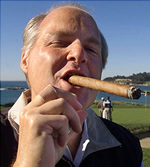
There might be more ideas out there, but that's not always a good thing.
5 Information Culture
So how is the age we live in, the Information Age, reinforcing and changing the Electronic Culture?
Last night, I was laying in bed, listening to an Ong lecture from 1972 on my iPhone. While I was listening, I was also taking notes on the iPhone, and emailing some realizations to others. Sounds like an exciting night, I know. My life in the bedroom notwithstanding, these realizations sparked an electronic conversation with those I was emailing. This blog post is electronically distributing my ideas. The notes I took while listening to the lecture reinforce Electronic Culture in that they were a record of what Ong was talking about as well as a record of my thoughts on the matter. And this process was not only sparked by Ong's oral presentation, but it will likely generate new conversations about these ideas. Not hard to see that both Oral Culture and Electronic Cultures are reinforced there.
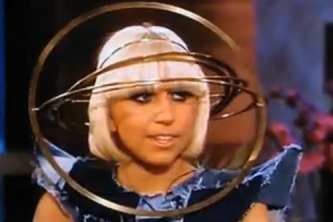
What would Ong have thought about Lady Gaga?
As for the Information Culture changing the preceding cultures-- take a look on Twitter and check out the trending topics for the Emmys. Or on your Facebook account, how many posts did you see about Michael Jackson in the week following his death, or about Coco in the past month?
The Information Culture is defined by such mediums as Twitter, Facebook, Blogs, and the Mobile Internet. All of these media have something in common: they change Electronic Culture in that now, anyone with an Internet connection can distribute or redistribute ideas (almost instantaneously) as opposed to the electronic culture where information transfer was not quite as simple. This allows for a flood of information on just about any topic you might find interesting-- from who the Cardinals' new third baseman will be to where you can buy Hamburger Ear Muffs.
On the one hand the Information culture allows for facts to be gathered, collaborated on, and the link of an individual fact can create a chain that describes cause / effect. On the other, not all of the observations are correct and you often have to sift thru a ton of crap to get to valuable observations.
In other words, people have to be careful about what media they consume in Electronic Culture. Need an example of how fast bad information can travel on the web? You don't need to look further than your email inbox at the forward your aunt sent you claiming Bill Gates will give you $10,000 if you forward the email to 25 people in the next 10 minutes.
If Oral Culture made it difficult to form treatises because not enough links could be remembered to generate a chain, Information Culture's challenge in creating a chain is to make sure all links of information are strong enough not to break the chain. This is easier said than done. Take a look at snopes.com if you don't believe me.

No comments:
Post a Comment